The Archive is Only The First Sentence...
A Presentation of Residency Research and Practice
G.A.S. Foundation, Lagos | Residency Presentation by Yoma Emore
Watch the Artist Talk


The Archive is Only the First Sentence | Artist Talk by Yoma Emore | Part 1
The Archive is Only the First Sentence | Artist Talk by Yoma Emore | Part 2
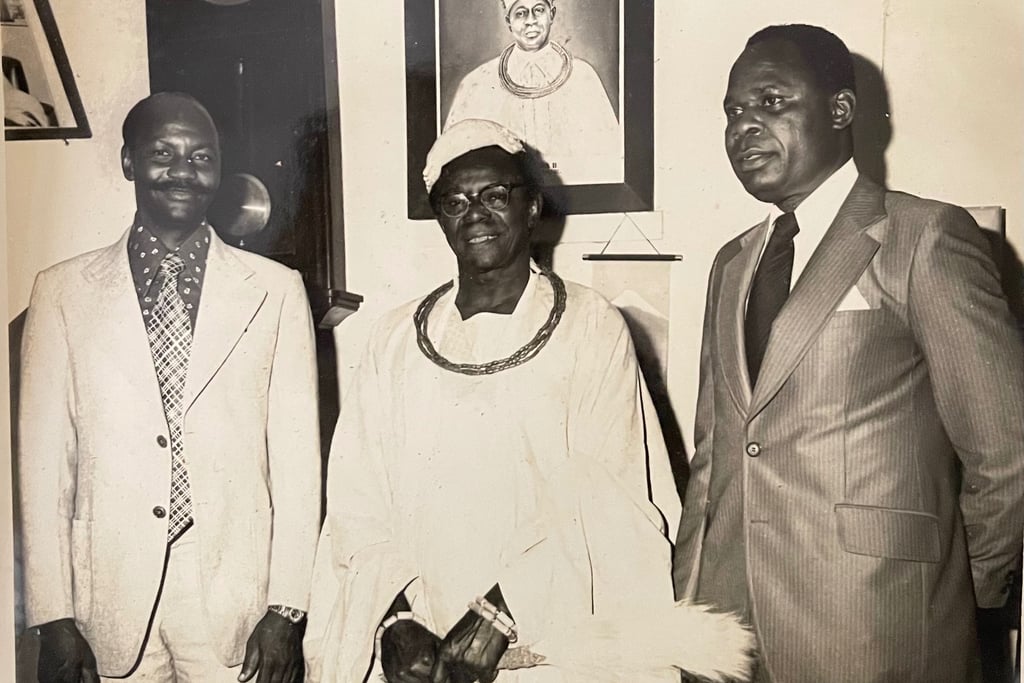
A previous body of work, There Was Once a Traveler, explored connectivity and intimacy through writing, correspondence, and maps. Inspired by my mother's exchanges with pen pals across the world during the 1970s and 1980s, the series examined how letters become records of relationships, movement, and time.
Through this work, I became increasingly interested in archives not only as records of information, but also as records of absence. Every archive contains gaps, omissions, and unfinished narratives. It is within these spaces that storytelling begins.
The Archive is Only the First Sentence is an artist talk presented during my residency at G.A.S. Foundation, Lagos. The presentation reflects on my multidisciplinary practice, which is rooted in textiles, archival research, and speculative storytelling. Through family histories, historical documents, material experimentation, and language, the talk explores how archives function not as conclusions, but as starting points for new narratives.
At the centre of the presentation is an ongoing body of research titled The Prince Who Never Was, a project that emerged from tracing family genealogy and expanded into questions of monarchy, power, cultural exchange, and historical memory within the Kingdom of Warri.
Archives as Beginnings
I often think about archives as beginnings rather than conclusions. An archive can tell us that something happened, but rarely tells us what it felt like, what was forgotten, or what came next. My practice exists in the space between documented history and imagined continuity. I am interested in the possibilities that emerge when archival records become incomplete, fragmented, or silent. Rather than treating archives as fixed repositories of truth, I approach them as invitations to speculate, interpret, and continue the story.
The title of the talk, The Archive is Only the First Sentence, reflects this approach. If the archive is the first sentence, then perhaps the work begins in imagining the paragraphs that follow.
From Archive to Artwork
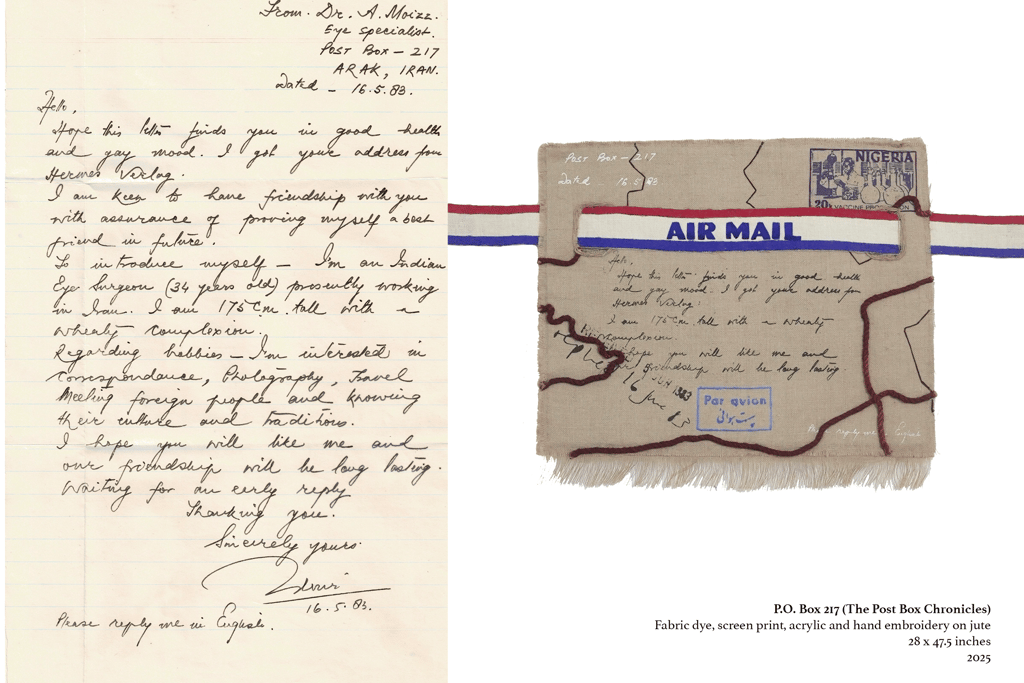
Text appears frequently throughout my work, though not primarily as a means of description or documentation. I am interested in text as image, and in language as a visual and material form. In many instances, the text itself becomes the drawing. The instability of language and its ability to be transformed, misread, fragmented, and reassembled, allows me to approach it less as a fixed system of communication and more as a material that can be manipulated and abstracted.
This interest in systems of meaning and interpretation eventually led me toward cartography.
Text as Image
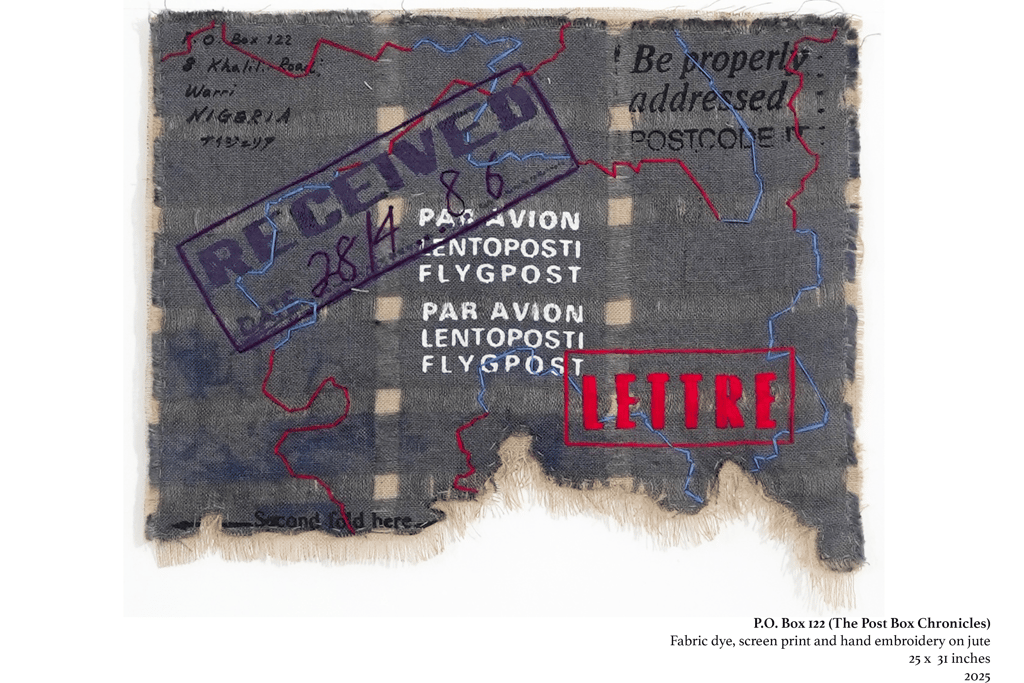
There Was Once a Traveler
My projects often begin with historical documents, family photographs, oral histories, and archival fragments. Through research, I develop premises that frequently centre around speculative characters, figures who allow me to navigate the spaces where the archive becomes silent.
Textile processes such as screen printing, embroidery, painting, dyeing, and layering become tools for extending these narratives beyond the historical record. The resulting works function as what I think of as secondary archives: repositories of continued memory that build upon the fragments that survive.
Alongside historical research, material experimentation became an important component of the residency.
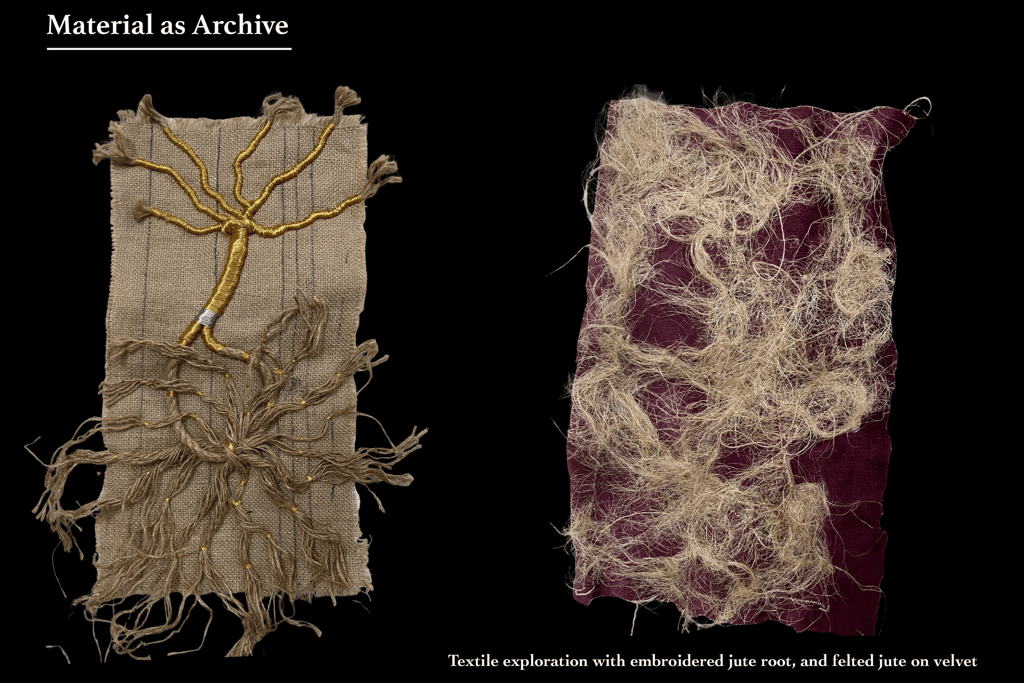
For The Prince Who Never Was, I have been working primarily with black velvet. Historically associated with wealth, aristocracy, and status, velvet carries symbolic and historical significance that resonates with the project's investigations into monarchy and power. I have also returned to jute, a material that appeared prominently in my previous body of work. During the residency, I began unraveling and felting the material back into its original fibres, a process that became a metaphor for genealogy, ancestry, and the search for origins.
Maps as Speculation
When historical records stop speaking, imagination becomes another research tool.
I am interested in fiction not as invention, but as a method of inquiry. Speculation allows me to approach histories that are fragmented, incomplete, or inaccessible. Maps occupy a similar space. While often perceived as objective documents, maps are constructions shaped by inclusion, omission, and interpretation. Increasingly, I have become interested in cartography as a way of visualizing relationships rather than territories.
The Prince Who Never Was: The Politics of Power and Place
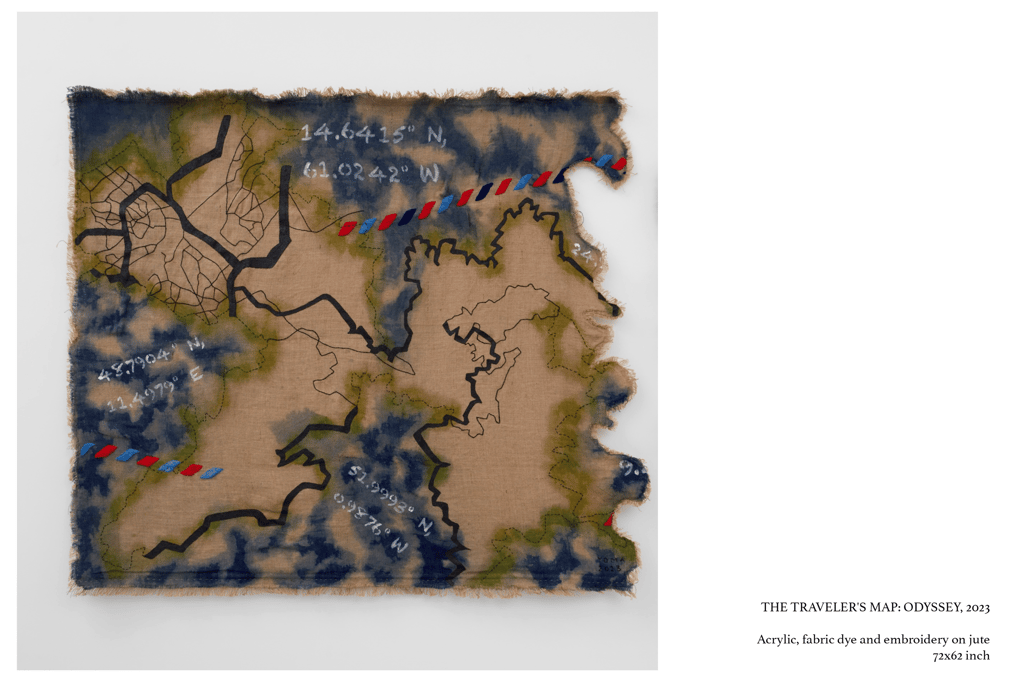
Roots have emerged as a recurring visual motif within the research. I think of roots as a form of cartography: systems that map relationships, movement, and connection beneath the surface. At the same time, I became increasingly interested in peeling walls and layered surfaces as forms of palimpsest. These deteriorating structures reveal multiple histories simultaneously, exposing traces of what existed before. Through layering velvet, jute, embroidery, and textile interventions, I have begun exploring how fabric might embody similar processes of concealment, erosion, and revelation.
Roots, Palimpsests, and Layered Histories
Material as Archive
The Prince Who Never Was began with an attempt to trace family genealogy. While researching my family history, I encountered references connecting my lineage to the sixteenth Olu of Warri. Simultaneously, I found myself reflecting on my grandfather's title of Olorogun of Warri and the structures of rank, authority, and inheritance that continue to shape the kingdom today. As the research expanded, I became increasingly interested in the relationship between the Kingdom of Warri and Portugal. Beginning in the late fifteenth century, diplomatic, religious, and commercial exchanges between the two kingdoms produced a unique historical encounter whose traces remain visible today.
Questions of legitimacy, religion, diplomacy, trade, language, and power emerged throughout the research. Figures such as Dom Domingos, a Warri prince educated in Coimbra under the sponsorship of the Portuguese crown, became important points of entry into understanding how histories, identities, and relationships were negotiated across continents. Rather than approaching these histories chronologically, I found myself thinking about them cartographically, as networks of relationships extending across time and geography.
How might one map ancestry?
How might one map memory, influence, legitimacy, migration, or belief?
These questions continue to shape the development of my work.
If the archive is only the first sentence, then perhaps the work of the artist is to imagine the paragraphs that follow, to trace connections, fill silences, and continue the story.
Artist: Yoma Emore
Venue: G.A.S. Foundation
Presentation: The Archive is Only the First Sentence
Research Project: The Prince Who Never Was
Mediums: Textile, archival research, cartography, language, material experimentation, speculative storytelling.
Language as Code
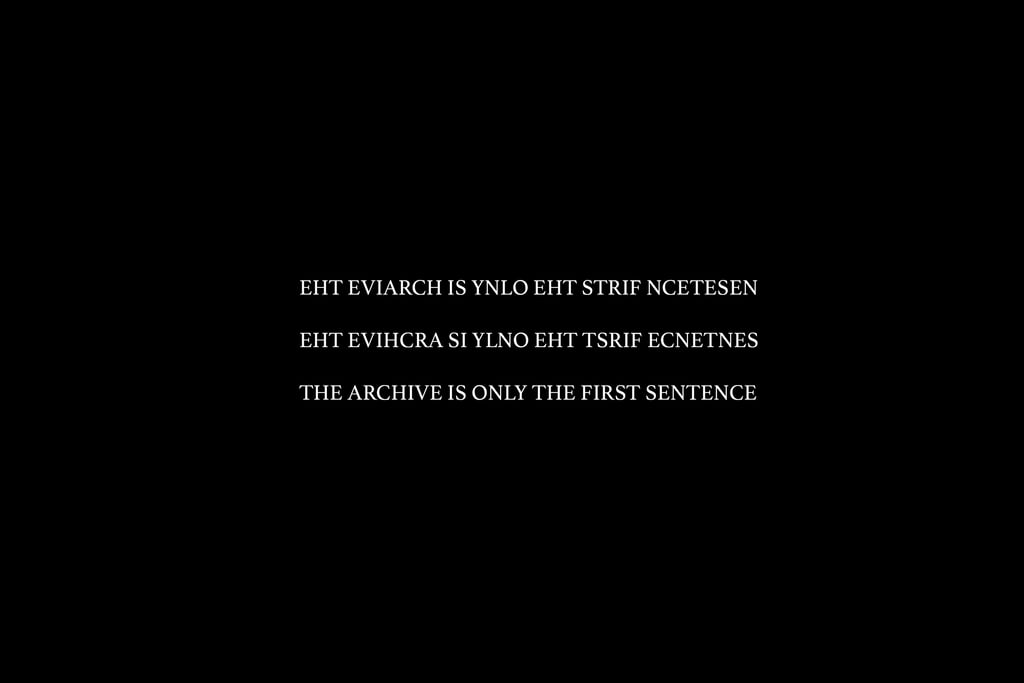
The final area of research explored during the residency was language. Much like maps, language functions as a codified system through which information is communicated, preserved, and interpreted. This led me to experiment with anagrams, palindromes, and the development of alternative systems of writing and translation.
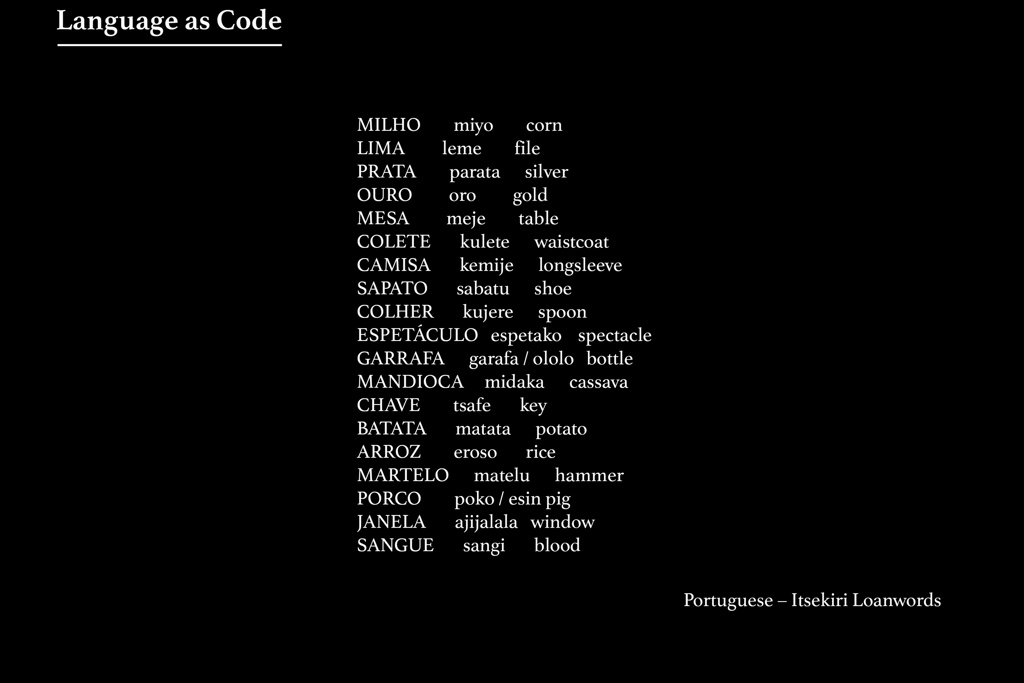
At the same time, I became interested in Portuguese loanwords within the Itsekiri language linguistic traces of centuries of trade, diplomacy, and cultural exchange between the Kingdom of Warri and Portugal. These words function as small but enduring archives, carrying evidence of movement, adaptation, and historical encounter.
Portuguese–Itsekiri Loanwords
EHT EVIHCRA SI YLNO EHT TSRIF ECNETNES
When Portuguese and Itsekiri words are placed side by side, their shared origins often remain visible despite changes in spelling and pronunciation. The words become evidence of exchange, transformation, and continuity across time.
Language, in this sense, becomes another archive waiting to be deciphered.
Yoma Emore
Email:
emoreyoma2016@gmail.com